
Showing posts with label Dubrovnik. Show all posts

Tuesday, March 29, 2011

News Flash - Postcard Swap, Birds for Japan and Superheros


I interrupt today's regularly scheduled blog post to bring you some interesting news. What do postcards, birds and superheros have in common? They are all on my blog today - read on to find out why!

Introducing the Liberate your Art Postcard Swap


Today I'm announcing the "Liberate your Art" Postcard Swap I'll be hosting this summer! Many of us have an artistic practice - whether it be photography, mixed media, painting, beading, papercrafting, ceramics, you name it - but we don't always share our craft with the rest of the world in a physical form. So I'm going to encourage you to "Liberate your Art" from the online world through a postcard swap! Is there anything better than getting artistic, creative snail mail in your post box? I don't think so!

Here's how it will work:
1. Have five postcard prints made of your original artwork. These could be photographs you've taken, prints of your painted or mixed media work, or images of 3D artwork. You can use five different images or five of the same image. The only requirement is that they be postcard-size prints of your original work (no layered or 3D artwork as part of this swap).
2. Mail the postcards to me in the US along with your address and return postage in July. (Signup and mailing details will be provided later, along with how non-US participants can provide return postage.)
3. You will receive five postcards back in the mail from other artists from around the world.

Sounds fun, doesn't it?

Though the swap won't take place until July after I return to the US, I'm telling you this now so that you can get started on your postcard prints. You may want to create them yourself at home, or you may want to order them from an online source. I've had great luck with moo.com and have a 20% off discount code for new customers if you order by 30 March - that's tomorrow (use this code: BK67DT). There are many other options for printing postcards, let me know what services you recommend and if you come across any discounts I'll share them in future updates.

More details and sign up will be available in the near future. Until then, start planning your postcards and get ready to Liberate your Art this summer!


Help Japan 1000 Birds Project


UK-based Japanese ceramics artist Makiko Hastings has a wonderful project going on to help Japan. She is creating and selling one thousand of these delightful little ceramic birds to raise money. All are unique, numbered and handmade by Maki. You can find out how to participate and help her help Japan on her blog, shin shin.

I have a special connection to Maki, since I had the opportunity to meet her when we visited England last summer. We met for breakfast and both were a bit nervous to meet someone from the online world. It seemed a bit weird at first, but we knew we had a love of art in common and quickly fell into conversation. I enjoyed talking with Maki and hearing the story of how she came to England from Japan and her dreams of being a ceramic artist. Since then, I've enjoyed following her adventures and her beautiful artwork on her blog.

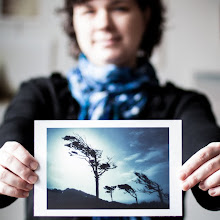
Maki and me at the "posh" Betty's Tea Room in York
I hope you'll support Maki's efforts to help Japan. We have three of these special little birds winging their way to us in Italy - I can see a group of three photo in my mind's eye already!

Are you a Superhero?

If you are ready to put on your cape and change the world with your creative ideas, my friend Jenny Shih is here to help you. She's a business coach for creative entrepreneurs, and I can't begin to express to you how enthusiastic she is about this job! Even though I haven't ever been "officially" coached by her, she's given me more helpful ideas than I can count, just in casual conversation. She's got it all - great ideas, great strategies and great heart

If you have a creative idea and are looking for some help to make your business a reality, or to help your existing business grow, she's the woman to help you become the superhero you were meant to be. Take a look at her fun video below and then stop by her site, jennyshih.com, to see how she can help you with your plans to change the world.


Put on Your Cape, It's Time to Save the World from Jenny Shih on Vimeo.

(Today's image is from a back alley in Dubrovnik, Croatia.)

Wednesday, January 5, 2011

Lessons from Abroad: Put Ideas on the Table


Lessons from Abroad: Put Ideas on the Table

[This post is part four in a five part series. See the previous posts here: one, two, three.]

We’ve covered the first lessons from my experience abroad on finding your passion and purpose: Change up your schedule, Find a regular practice, and Get out of your comfort zone. This time I’m going to share a fun and easy lesson: Put Ideas on the Table.

As you begin to see the world of possibility opening up when you get out of your comfort zone, and you begin to receive all sorts of inspiration during your regular practice, you will find that you have a lot of new ideas. You need to put them someplace safe, where they won’t get trampled on. A place where they can be examined but not immediately decided or discarded. That place is “on the table.”

Let me explain what this means by telling you a story....

Early in our time in Italy, the move had definitely inspired my family to look at the world in a different way. As with any change, we were really examining our lives, both individually and as a family, and looking at what might come next. We had this opportunity, this little break from “reality” as I put it, which allowed us to dream up all kinds of crazy scenarios. The problem was, when my husband or I would bring up an idea, it was very easy for the other one of us to feel threatened and quickly point out all of the flaws - how it wouldn’t work for all sorts of reasons.

So during one of these conversations, where I had thrown out an idea and my husband was confused because it conflicted with an idea we had discussed several days earlier, I said, “I’m just putting these ideas on the table. Every so often, I want to pick one up, look at it from different angles, and then put it back on the table. We don’t have to decide right now.”

This concept, of putting ideas on the table, became a huge key for us to be able to really discuss ideas without the emotional attachments or reactions that can crush them too early or drive poor decisions. Let’s examine why…

It takes the idea from being a living piece of you, “your idea”, and makes it a thing, “the idea.” You can imagine it there as physical thing, sitting on a table, like a coffee cup in a store. You can imagine a discussion about it is the same as picking the cup up, looking at it from different angles. Then, you can just set the idea down and leave it there. No decisions or agreements have to be made from the discussion, just like nothing has to be done after you’ve looked at the cup. You’re just browsing. If the conversation starts to get emotional or personal, you can say, “Hey, ideas on the table here!” just to get the perspective back.

Not only does it reduce the emotional attachments we feel to our ideas, it also allows for several radically different and conflicting ideas to be held at the same time. Most of us probably like alignment in our lives. We have plans and like to know where we are going. When an idea that is diametrically opposed to our current direction comes up, it is easy to dismiss it without a second thought because of the disruption it would cause. But if the idea is placed on the table, it can coexist with numerous other ideas that have no relation to each other. You don’t have to think about them all at the same time or choose between them, you look at the ideas one at a time, and then put them back.

Over time, as you periodically examine the ideas, picking them up off of the table every so often, you will find that the ideas sort of magically whittle themselves down. Some of the ideas get dusty, sitting there. Some fall off the table and you never even notice, you just subconsciously discarded them. You might pick them up later, look at them, and think, “Yeah, done with that idea.” Eventually you end up with a few ideas that start to have actions formed around them. The discussion naturally transitions from evaluating the idea to acting on the idea. You may still not be fully committed to it, but you feel these ideas are worthy of more in depth investigation. Just because you choose to pursue one idea doesn’t mean the table has to be cleared off and all of the other ideas thrown away, they can stay there for the future.

This concept works with for you alone as well as with family and friends – any time a new idea comes to you. Here are some thoughts on how to use this to find your passion and purpose:

  • First, be clear that you are putting the idea “on the table.” This might mean discussing the concept of “on the table” with your partner or just writing it down in your journal that you are approaching the evaluation of the idea this way. This frees up the emotional attachment, the fear of putting the idea out there only to be crushed. If you are going to use this with other people, I recommend starting it with ideas that are not the about your core – your passion and purpose – to make sure the other person really gets it and will play along. You might need to nurture those core ideas on your personal table for a while so they don’t get crushed too early by others who aren’t playing along.
  • Once the idea is “on the table,” feel free to examine it or not as often as you like. It will be there any time you want to come back to it. If you feel yourself obsessing about it, leave it for a while. If you find you are dismissing ideas before you get a chance to get them on the table, consciously acknowledge the idea and then just leave it there.
  • Use a physical tool, like sticky notes or a journal to represent the ideas if you want to “keep” them somewhere in the real world along with on the virtual table. I have an idea notebook, where I scribble ideas as they come to me, just to put them somewhere and move them out of my mind. Sometimes, I come back to these ideas naturally, examine them and start to do something with them. Other times, I will only examine them when I flip through the notebook. But they aren’t lost, immediately dismissed to be never thought again.
  • If you find yourself starting down the path of action with an idea, either dismissing it or putting it into use, just do a quick check if that is really aligned with your true intention or if you are caught up in the “action trap” where you feel you have to decide in that moment. If your gut check says, yes, it’s time to move on this idea – then move.

The entire concept of “putting ideas on the table” has been a huge benefit for me, my family and anyone I’ve shared it with. Without this, an idea that needs time to grow and mature to be accepted can be killed too early. Or we can commit ourselves too early to ideas that don’t seem so good upon later reflection. The “table” is a safe place to keep them, examine them, and eventually sort them out – moving toward your passion and purpose all the while.

(Photo is from Dubrovnik, Croatia)

Thursday, October 7, 2010

Exploring with a Camera: Photo Essays


In the last year I've explored a vast range of art and photography. Visiting galleries, taking online classes, searching out photography blogs, looking at Flickr. What I've found, in all of that, is that my enjoyment of art, and especially photography, significantly increases with understanding of the back story... either the story of the artist or the story of the subject. It gives such a wonderful insight into the artwork that has been created, it's like an additional dimension to the art itself.

I think that's why I blog the way I do, and I'm attracted to other blogs with wonderful imagery and words. I want the story behind the image, along with the image. I connect with it in a deeper way, and I want you to find that here as well.

So today for Exploring with a Camera I want to talk about Photo Essays - which are beyond even what I normally do on my blog.  Yesterday's post Camaraderie of Beer on Oktoberfest is an example of a photo essay, or my earlier post The Story of the Rooftops on Dubrovnik. There are times that a story needs to be told, and it takes more than one photo and a few sentences to tell.

You might ask, isn't just a regular blog post, with several photos and text, a photo essay? Maybe, maybe not. I've read a lot of blog posts, but only a small few that I would categorize as a photo essay.  Two that stand out in my mind are Kirstin's post Where I Live on the Mortal Muses More Musing site, and Patty's post The Down Side on her blog, Nomadic Notebook.
A photo essay takes a few photos, combined with words, to tell a specific story of a time, a place, an experience, a piece of history. It has impact. It is basically photojournalism, but with a personal twist, by my definition. While you want to convey the information, you also want to convey the feeling you might have had. Why the story or experience is important to you, why you felt it needed to be told. In a photo essay, you focus on a specific point with your photos and words. Every photo tells a piece of the story, every word needs to be there. It's not just the best photos of the day, but the ones that are needed to support the story.

So, how do you go about creating a photo essay? Here are a few tips:
1. Decide the story you want to tell. Be specific for the best impact. For example, I didn't want to try to tell whole the story of Oktoberfest - that's too big for just a few photos, I would lose the impact. So I took one aspect I noticed, the camaraderie in the beer drinking, and focused on that.
2. Choose your supporting photos. In some cases, you might have the idea in your head as you take the photos, which is what I did for my Oktoberfest essay. In other cases the story might develop as you review past photos, which is what happened for my Dubrovnik essay. Go through your photos, pick all of the ones that seem to apply. And then narrow down. Narrow down again. Make sure that each photo is essential to the story you are telling - try to get it down to 3 to 5 photos if you can. As I mentioned above, pick the best photos for the story, not just the best photos of the day. If they don't help tell the story, save them for something else.
3. Write the essay, inserting the photos. You might find that you have to switch them around from your original idea slightly or you need to choose a different photo for the story to flow. That's ok!  It doesn't have to be long, just get the main story written with the photos inserted.
4. Edit. Step back and read it, making edits. Read it again. Take out anything that doesn't flow or support your point. It might be a great idea or photo or brilliantly written sentence, but it has to fit the story. Do with your words what you did with your photos - narrow down.
5. Publish! Share that photo essay with the world. The world needed to see it, or you wouldn't have had the idea in your head. If you ever see or feel a story that needs to be told, follow that urge to conclusion and then see what comes back. You just never know!

Not so many photos today, but I hope that this post has inspired you to look at how you can combine your images with words to great effect, or to notice how others create an impact using the photo essay. Come back next Thursday to share your view and link in to any photo essays of your own, past or present. Or link in to ones that you have found on the web, that have impacted you in some way. You can post your photo essay images to the Flickr pool too - I'll be watching for them there!

Note: This post is part of the Exploring with a Camera series, published every two weeks. See all past exploration topics here.

Monday, September 20, 2010

Six Days of Night: Croatia


Night is a time of contrasts. Light and dark. Busy and quiet. Wandering the old town of Split, I found this lonely little table in a back alley. By day, you would probably find someone drinking a coffee here. By night, it was silent and empty. The security lights are stark and unforgiving.

Contrast that with this main street in Dubrovnik, where the night is a gathering time. Warm light spills out of the doors and the restaurants, to reflect on the marble-paved streets. Artistic lights highlight the architectural details of buildings. You can almost hear the murmur of conversation, the clank of utensils on plates, drifting laughter.


Both Croatia, both historic city centers, both night. Yet so different.

Sunday, August 8, 2010

Blank Slate

Every morning, I come to this point, with a blank slate. An empty page, devoid of image or words. Ready to write, ready to receive some inspiration for the day. Sometimes, I have an idea of what I want to write, what photo I will select, before I sit down. Sometimes I don't. And sometimes, even when I have an idea, I throw that idea out the window and just write whatever comes into my head at that moment. Post whatever picture calls to me. It's become an interesting process, and I learn unexpected things from my photographs and my writing this way. A blank page becomes the window to my soul.

It's one of the reasons I don't write scheduled posts much while I'm on vacation. This is part of my daily practice of creativity, and I can't seem to pre-schedule my future creativity. Sure, I could share pictures while I'm gone, but the magic of the daily choice, the daily contemplation that goes along with them is missing.

Do you have a daily creativity practice, that has become essential to your art? What is it, how did you find it? I'm curious how you practice your creativity, how you open that window to your soul.

Wednesday, July 21, 2010

Why Windows?

An attractive set of windows in Dubrovnik caught my eye. As I was editing this photo and others from this day I wondered, why windows? Why do they catch my eye so? Especially ones with plants and flowers in them. Ones like this, with interesting bars to cover them too.

Maybe it's because of the individuality of each of them. Each window is different, unique, has a history of its own. The decorations reflect the individuality of the owners, no two are alike. They are an outward display of the lives inside. So much of peoples lives is closed inside here in Europe - inside the shuttered windows and big solid doors - that this is a little glimpse that there is someone living in there. And someone there who cares to make their place look pretty on the outside, even if the only way to do that is to decorate the window. Not for the tourists, but for themselves and their neighbors, the people who will enjoy it every day.

And I get to enjoy these windows, to photograph them, and to share them with you. Thanks to all of these anonymous people, who make my images possible. They are the true artists here!

Monday, July 19, 2010

The Story in the Rooftops

There is a story in the rooftops of Dubrovnik. A history, there for the eyes to see. Not the history of hundreds of years ago, but of less than two decades. A story from the Croat-Serb conflict of 20 years ago.

Shortly after Croatia declared independence from Yugoslavia, Dubrovnik was beseiged for seven months as part of the conflict, in 1991-1992. The idea was that breaking Dubrovnik would break the spirit of the Croatian conflict. But Dubrovnik was never broken, and neither was the spirit of the Croats. This city survived, as it has survived for centuries, even against major powers like the Venetians. And now it is rebuilt, the damaged rooftops and streets repaired to invite visitors once again.
So Dubrovnik has an interesting look, because of all of this, with most of the centuries-old buildings sporting new rooftops. You can see the difference between the ones from long ago and the ones that are brand new. You can see the spirit of the people who survived and defended their city in modern times. You can hear it in the stories of the people you talk to... from the restaurant owner who tried to teach us to make a whistle with our hands "like they used to communicate in the war" to the owner of the apartment we rented who told us how the old aqueduct system bringing water to the town worked even during the conflict.

There is pride in these stories, pride in the rooftops. They respect the history of the town, and it becomes intertwined with these recent histories and experiences. In some places, you see where they tried to repair the roofs with as many old tiles as possible, combining them with new. It all becomes one continuous history.
And when you look out over the town, you get a visible reminder that conflict is not gone from our world. But it can end, people can rebuild and in the course of less than a lifetime go from besieged town to thriving tourist destination. Dubrovnik was a beautiful city, well worth the visit. But I think what I liked best, was hearing the story of the people who live there and reading the story in the rooftops.

Monday, July 12, 2010

Great Expectations

What a find this morning! I love this photo from Dubrovnik, Croatia. I love the amazing texture and range of subtle colors. I love all of the layers and angles. I could look at this photo for hours and continue to discover new things.

I began working with my Dubrovnik photos this morning with the idea that I wanted to let myself be surprised. To see what images would pop out that I did not expect, did not plan. There are times I create my art at the moment of taking the photos with intention and foresight, lining up a composition just so, taking multiple exposures and compositions to study and see which I like best. When one of these comes out the way I visualized it, I am satisfied, but not necessarily overjoyed. Why? Because, with the work and intention I set at the time of creation, I expected at least one of those images to come out well.

But the images that often fill me with joy and excitement are the surprise ones. Like this one. Where my inner eye saw something in the moment, caught a frame or two but didn't dwell on it. I don't even remember capturing this image, and so to find it so wonderful now is a joyful surprise, a little gift in my day.

I worked with a guy that said, "Expectations are premeditated disappointment." And there is some truth to that statement. When we expect something to happen and attach to specific outcome, we can be satisfied when it does turn out but when it doesn't happen we are disappointed. But, what if we create without any expectations for the end result - the specifics of how it looks or how it will be received? What if we let loose our inner eye and detach from the outcome? Every image can become a surprise, every outcome positive - wonderful no matter what the specific details - because we didn't set up any expectations. By letting go of those expectations, which are all about what our minds can envision at that moment, we allow space for other new and wonderful things to happen which are beyond our current vision.

This doesn't just apply to creating art, but all aspects of our life, our work and our relationships as well. In her book Simple Abundance, Sarah Ban Breathnach says, "I approach my work with a passionate intensity, acting as if its success depends entirely on me. But once I've done my best, I try to let go as much as possible and have no expectations about how my work will be received by the world. I have consciously chose to be surprised by joy. It's a choice you can make as well."

I'm making that same choice to be joyfully surprised by the outcome of my work, my art. From the creation of it in-camera to the reception of it by the world around me. That doesn't mean I won't be intentional about creation anymore, that I'll stop visualizing an outcome and seeking to achieve it, but it does mean detaching from the end result. Because I've found it's a lot more fun to be surprised than to be disappointed.